
Collaborative Divorce Lawyer
Collaborative Divorce in Massachusetts
Collaborative divorce lawyer serving Worcester County
People toss the word “collaborative” around a lot, but what exactly is a collaborative divorce lawyer? Is he just a lawyer who happens to be amiable during negotiations? No. It’s really something different. He follows a defined legal process. There’s a contract that both spouses and the two attorneys are bound by to settle everything out of the courtroom.
What makes collaborative divorce different from regular negotiation? Both of you, each of you along with each attorney, sign a contract at the very beginning: a contract that says something very significant: that should negotiations fail to settle everything, the lawyers are required to leave the case. Neither one of them will represent you or your spouse if the case goes to trial. That’s how the attorneys remain committed to the goal of finding resolution outside court. In Massachusetts, collaborative divorce is a legitimate option to resolve the ending of a marriage. If you are working with a divorce lawyer in Worcester, MA who is trained in the collaborative process, the experience looks very different from a traditional courtroom battle — but the legal outcomes are just as thorough. Just like a traditional court case, the divorce process divides up assets, awards alimony, creates a parenting plan, and divides the couple’s property. Nothing is missed. This happens as well in a collaborative divorce case, but all through four-way sessions at the table both you and your spouse, and both of your respective attorneys, working toward resolution together.
Call our office today at (508) 425-6330 or reach out here online to set up a consultation.

The Process of a Collaborative Divorce
Each spouse selects a collaborative divorce lawyer. Both of you together with the two attorneys sign a participation agreement. There’s full financial disclosure from both sides, including all the required documentation. All the issues are tackled in four-way meetings. If necessary, other professionals are brought in as resources, such as financial consultants or child specialists. Once both parties agree on all issues, the two lawyers will draft and submit to court a marital settlement agreement.
Many Worcester couples, often with their children in mind, find the process of litigation to be too difficult for them. They don’t want to have to fight in a long court process and have a judge decide how things will happen. They want more control and to work things out on their own. Many folks in Tatnuck or Burncoat come to us because they heard horror stories about the litigation process from neighbors who have gone through that ordeal. They would like to do things differently.
What many couples don’t understand is how much control they maintain during this process. You don’t have a judge sitting in the room deciding your life for you. You’re the one making the decisions with the benefit of legal advice as you do so. According to the International Academy of Collaborative Professionals, the largest percentage of cases brought into the collaborative process results in a written agreement without going to court. This is, obviously, not a certainty. But it is an indication of how things work in the collaborative divorce process.
Reach out by calling the office at (508) 425-6330 or through filling out our online contact form.
The Collaborative Divorce Process, Explained
People constantly ask me what actually takes place in collaborative divorce. The process is fairly easy to understand. It follows the structure outlined below.
First, each spouse retains a lawyer. Both of you are individually represented but your attorneys each sign an agreement pledging to resolve the case out of court through a series of four-way meetings.
Second, the lawyers and spouses meet together to discuss the matters to be decided, including division of property, child custody, alimony, and other issues. All of you work together to create an equitable agreement that works for you all.
- We create ground rules, identify the most significant issues, and set up an agenda for your family. Often, your first collaborative divorce meeting takes place right here in Worcester at one of our office locations.
- You and your spouse share your financial information. That means full transparency. Bank accounts, investment and retirement accounts, real estate, and debts are all disclosed and available for discussion at the table. There are no asset hiding tricks or discovery motions in your collaborative divorce process; everything is disclosed fully.
- You bring in neutral experts (if needed). Your divorce professionals might include financial specialists to help you divide your marital assets or child specialists to help you craft your parenting plan. You don’t hire them for your side; they work together for both of you.
- You work through several meetings to resolve all your issues. Most of our cases involve three to six collaborative sessions at a pace that works for the family. You tackle property division, alimony assistance and other issues one at a time while we document the agreements as we go.
- You and your spouse sign a marital settlement agreement. Every single divorce resolution issue has been negotiated, we draft up your final agreement, and then submit the agreement for approval by the Worcester Probate and Family Court.
The first meeting is often the most challenging for couples because it takes a bit of courage to sit across from each other. By the second meeting, most Worcester couples have begun the process of collaborative problem-solving.
And here’s the kicker. If your collaborative divorce process breaks down and you choose traditional divorce litigation, both collaborative divorce attorneys must withdraw. That built-in disincentive for one spouse to walk away from a collaborative divorce ensures that all sides will negotiate in good faith. Many couples in the Burncoat neighborhood of Worcester, and throughout Worcester, never think it’s possible to agree to such an agreement, but this commitment changes the entire dynamic.
Have questions? Give us a call to discuss whether the collaborative divorce process could fit your family.
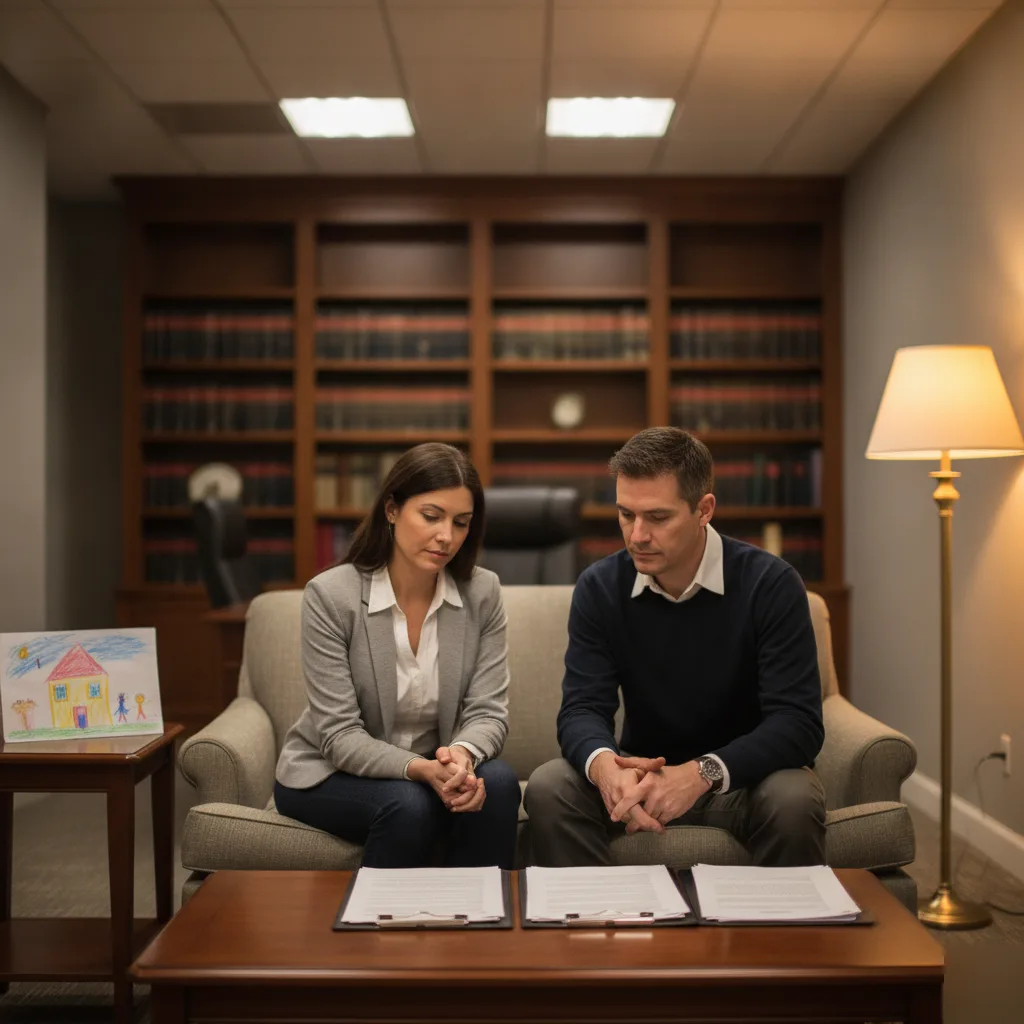
Why Worcester Couples Choose Collaborative Divorce Over Divorce Litigation
It’s hard enough to get a divorce; nobody wants to turn their family into adversarial sides of a courtroom divorce battle. In every case, Worcester couples come to our office and tell us that their primary concern is ending their marriage while preserving whatever relationship may still exist between them.
This is the reason so many people choose collaborative divorce in lieu of divorce litigation. You and your spouse control the divorce process. The two of you will decide upon division of marital assets, the development of your parenting plan and alimony assistance, rather than the judge who met with you for 20 minutes.
What’s Different About Collaborative Divorce?
With traditional divorce litigation, each side prepares for litigation. Motions are filed and the discovery process is protracted. Dates for your case are continuously postponed because of the busy caseload of the Worcester Probate and Family Court. Contested divorce cases often take a year, or longer, to be resolved in the Worcester courtroom. You pay the price in both the court’s backlog and for the emotional stress that you don’t need.
Collaborative divorce works differently. In a collaborative divorce, you and your spouse and both your divorce attorneys sign an agreement to try to resolve your case outside of the courtroom. If a party withdraws from the collaboration, the attorneys are also required to withdraw from the case. This built-in accountability keeps both sides in the game and focused on a resolution to their divorce case. Understanding which approach fits your situation is essential — the American Bar Association’s guide on choosing the best divorce route for your family offers a helpful overview of how collaborative, mediated, and litigated divorces compare. Worcester families choose collaborative law for the following reasons:
- Privacy. Court records are public. Collaborative meetings are not.
- Speed. The majority of collaborative cases are resolved within three to six months.
- Greater success in co-parenting post-divorce.
- Lower levels of conflict reduce trauma for children.
- You maintain control of your case rather than giving it to a judge.
We’ve seen the collaborative process many times with Worcester families in Burncoat and Lincoln Village neighborhoods, and the result has been almost always the same: “We wish we knew about collaborative law sooner.” Collaborative law does not make sense for every case, particularly those that involve asset dissipation, hidden assets, and domestic violence. That assessment happens at your initial divorce consultation with one of our collaborative divorce attorneys. We’ll be frank about whether collaborative divorce fits your situation.
The Disqualification Rule: How It Works & Why It Matters
The disqualification rule is one element of collaborative divorce most people don’t understand until they talk with one of our Worcester collaborative divorce lawyers. It’s also the element that can change how you think about your collaborative divorce.
Here’s how it works: if your spouse and you aren’t able to settle your case through the collaborative process and it has to end in court, your collaborative divorce attorney can no longer represent you. Both of your collaborative divorce attorneys must withdraw. You and your spouse will need to hire new attorneys to represent you in court.
While that sounds a bit odd and cumbersome, the disqualification rule is the mechanism that drives the collaborative process. Consider the incentives it establishes: the spouses’ attorneys, both spouses, and the case itself are all “all in” in a way. There’s no going back and forth to the courtroom with new attorneys and more billable hours. Everyone is focused on settlement in the collaborative process because the alternative is much more expensive, time-consuming, and adversarial than the initial negotiation.
The Disqualification Rule Benefits the Parties, Too
Often, clients are nervous about collaborative law because they think they’re “giving” it up. “What if my spouse simply stops participating in the collaborative process? What’s my back-up if that happens?”
The reality is that the disqualification rule provides more protection than parties think it does. If the disqualification rule makes everyone more committed to the collaborative process, then both sides are more likely to make good faith efforts at settlement. Research from collaborative law associations finds that the vast majority of collaborative cases settle with no trial.
By signing the disqualification agreement, your collaborative divorce lawyer is signaling that they believe the collaborative process is the right process for you and your family. They aren’t holding back a litigation plan as a back-up in case the process falls apart. They’re all in for settlement. Your spouse’s collaborative lawyer is too. That makes a significant difference. The disqualification rule has some implications for your specific collaborative divorce:
- Both of you and your spouse’s attorney sign an agreement to participate in collaborative divorce before the process starts.
- Everything is negotiated through in-person four-way meetings, not through motions or court papers.
- If either party stops participating in good faith, the collaborative process is over and you both hire new lawyers to represent you in court.
- Financial experts and neutral professionals remain part of the team throughout.
We discuss this commitment with every client in our Worcester office before moving forward. It ensures you know exactly what you’re getting into, what your spouse is committing to, and what the consequences are if the process breaks down. No questions left unanswered.
That disqualification rule may seem severe at the outset, yet it’s precisely what makes the collaborative process so effective. It transforms your attorney into a partner dedicated to resolving issues rather than a combatant seeking a win. This aligns with the feedback from nearly all our clients in the Burncoat and Greendale sections of the city.
Collaborative Divorce With Children or Difficult Assets
When children are involved, a divorce takes on a completely different dimension. With custody considerations present, every decision is magnified because it affects the children for the foreseeable future.
In Worcester, we frequently observe parents who initially express a mutual desire to maintain a cordial relationship. However, conflicts soon emerge regarding visitation, school assignments, or holiday scheduling. The collaborative divorce approach provides a structured avenue for parents to navigate the creation of a parenting plan independently, rather than deferring to a judge. A child specialist may also be integrated to keep your children’s interests at the forefront of discussions, shielding them from the friction of legal adversarial posturing.
Tackling Complex Assets
Financial complications introduce an additional level of intricacy. This could involve a jointly owned business, family trust funds, retirement assets, or real estate throughout the county. In such scenarios, dividing the marital estate is rarely a straightforward matter and demands meticulous evaluation and openness from both parties.
The advantages the collaborative process provides for intricate financial cases include:
- Engagement of an impartial financial expert who evaluates all assets and liabilities with neutrality
- Unconditional disclosure, replacing the discovery process mandated by court rules
- Flexible property division strategies that may not be available in a standard court-ordered outcome
- Tax-conscious planning that offers enduring advantages for both spouses
Particularly for couples with complicated financial landscapes, collaborative divorce proves more beneficial than traditional litigation. The key factor? The ability to have specialized consultants at the table who can craft solutions a judge couldn’t envision. A judge might review your financial situation for just 15 minutes. Your collaborative team invests hours analyzing it.
For Shrewsbury Street area business owners and other Worcester residents, the privacy factor alone is a significant draw. Collaborative divorce is confidential. Your business appraisal, income disclosures, and financial agreements never enter the public domain at Worcester Probate and Family Court.
Can’t determine whether your case falls into the “complicated” category? That uncertainty is quite typical. Please contact our office, and we’ll review your circumstances.
Our firm has successfully assisted numerous families in collaborative divorces involving intricate business ventures or multi-generational family planning. It is a robust methodology for achieving a mutually agreeable outcome. However, success is contingent upon engaging counsel experienced in this approach.
Frequently Asked Questions
What happens if my spouse and I can’t reach an agreement in the collaborative process?
If the collaborative process breaks down, both attorneys must withdraw from the case. Neither lawyer can represent either spouse in court. This rule is built into the participation agreement you both sign at the start. It keeps everyone focused on finding real solutions. Most Worcester couples find this rule actually helps them stay at the table. It removes the temptation to walk away and fight it out in front of a judge.
How long does a collaborative divorce typically take in Worcester?
Most collaborative divorce cases in Worcester involve three to six four-way sessions before reaching a final agreement. The pace depends on your family’s needs and how complex your finances are. Once you reach full agreement, the attorneys submit your marital settlement agreement to Worcester Probate and Family Court for approval. This is usually much faster than contested litigation, which can drag on for a year or more. Your timeline is largely in your hands.
Do we have to share all our financial information with each other?
Yes, full financial disclosure is required from both spouses. That means bank accounts, retirement accounts, real estate, and debts all go on the table. There are no hidden assets and no discovery motions. This transparency is what makes the process work. Many couples in neighborhoods like Tatnuck and Burncoat are surprised by how smoothly things move once everything is out in the open. Honesty from the start protects the final agreement.
Can we bring in outside experts during the collaborative process in Worcester?
Yes, and it often helps. You can bring in neutral financial specialists to help divide complex assets or child specialists to help shape your parenting plan. These professionals work for both of you, not just one side. They are not hired as advocates. This is one of the biggest advantages of collaborative divorce. You get expert guidance without the cost and conflict of dueling hired experts fighting against each other in a Worcester courtroom.
Is collaborative divorce a good option if we have children?
Collaborative divorce is often the best fit for parents who want to protect their kids from a long court battle. You build a parenting plan together, with input from child specialists if needed. A judge never steps in to decide your family’s future. Many Worcester parents choose this path specifically because they want their children to see them working together, not fighting. The process keeps the focus on what works best for your family, not what wins in court.
Call our office today at (508) 425-6330 or contact us online to set up a free consultation.
Why Choose Rudolf, Smith, Griffis & Ruggieri, LLP?
What Sets Us Apart
Trial Preparedness
Our attorneys know the value of examining evidence, hiring investigators, and interviewing witnesses. We can go to court on your behalf at any moment.
Personal Attention
We purposely limit our caseload to make sure our clients receive one-on-one attention. We treat you like one of our own because you deserve it.

Strategic Approach
To represent our clients effectively, we must have an effective strategy put into place. We are calculated, prepared, and primed to take action.
Collaborative Insight
We believe in working together as a unified team. By working collaboratively, each team member can bring unique critical thinking solutions to the table.

Get Started With a Consultation
Contact Us Today or Call Us at (508) 425-6330