
Does Massachusetts Actually Have Legal Separation, or Is It Called Something Else?
What Massachusetts Calls Legal Separation
Facing marital difficulties in Massachusetts is tough enough. Then you hear about “legal separation,” and it sounds like a real path forward. You’d think it would be straightforward.
Here’s the rub. Massachusetts doesn’t have “legal separation” in the way most other states do. There’s no statute that lets you file a petition labeled just that. You can’t walk away with a court order splitting everything while you’re still married, not exactly.
Legal separation isn’t recognized under Massachusetts law, and that surprises a lot of people. Rudolf, Smith, Griffis + Ruggieri divorce attorneys hear about this constantly from clients at our Worcester office. The term they’ve been searching for simply doesn’t exist here — it’s one of the most common misconceptions we run into. But that doesn’t mean you’re stuck without options. There are still real paths to get the protection and clarity you need, and our team can walk you through what actually applies in your situation.
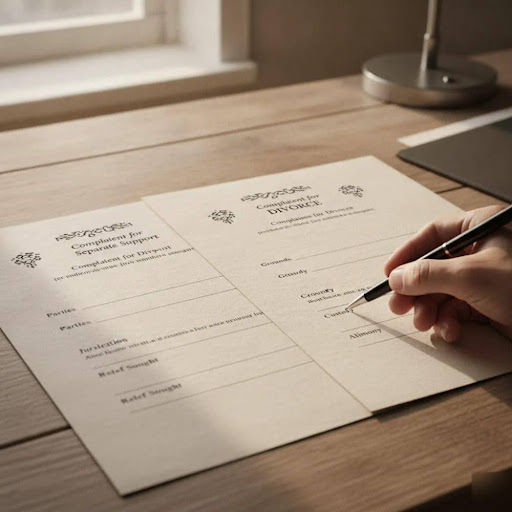
Massachusetts uses something called “separate support.” It’s under Massachusetts General Laws Chapter 209, Section 32. This action lets you ask the court for orders on big issues. We’re talking custody, child support, and who gets to use the marital home. You stay legally married. The court simply sets rules for living apart. It helps you get some breathing room.
Get in touch for your free case consultation online or by calling (508) 425-6330.
How Separate Support Works
Think of separate support as a legal framework. It’s for married people who aren’t ready to divorce but just can’t keep sharing a household anymore. The current situation is too much. You file a complaint in Probate and Family Court. Here in Worcester County, that’s the courthouse right on Main Street downtown. A judge can then issue orders. They cover several critical areas:
- Who stays in the family home, and who moves out.
- How much financial assistance one spouse pays the other.
- Custody arrangements and parenting time for minor children.
- Health insurance coverage and certain other money obligations.
These orders carry real legal weight, by the way. Violating them can lead to serious contempt proceedings. These aren’t just suggestions. They’re enforceable court orders that you need to follow.
One important thing separate support does not do, however, is divide your property. It’s not like a divorce. You won’t get a final split of retirement accounts, real estate equity, or business assets through this process. That only happens once a divorce is filed.
Why People in Worcester Choose This Path
We see a few recurring reasons for choosing separate support. Some couples have deep religious beliefs. Divorce feels impossible right now because of those convictions. Others want to keep their health insurance coverage. That often ends the moment a divorce decree is final. And some folks just need time,. They want space and structure without the finality of ending the marriage for good.
A client from the Burncoat neighborhood once shared her thoughts with us. She needed “breathing room, not a goodbye.” Separate support gave her exactly that. She got court-ordered support payments and a clear parenting schedule. Her husband moved to an apartment near Green Hill Park. They both had legal protection. No divorce filing was needed then.
That scenario plays out more often than you’d think in our community.
Contact Us
With over 70 years of combined experience, Rudolf, Smith, Griffis & Ruggieri, LLP can give clients the leadership they need on difficult matters of criminal defense, family law, and more.
The Catch You Should Know About
Separate support doesn’t offer the same kind of protection as a full divorce, especially concerning new debt or asset changes. You’re still legally married. So if your spouse takes on major debt or makes big financial decisions, those actions could affect you. This is a real risk. Our experienced team discusses it with every client considering this route. It’s a critical point.
And here’s another thing most people miss. A separate support order doesn’t just automatically turn into a divorce. If you decide later that you do want to end the marriage, you’ll need to file a separate divorce action. The separate support case is its own thing entirely. It won’t convert itself.
If you’re trying to figure out if separate support makes sense for your situation, our team can walk you through both paths. We do this during a free consultation. We’ve helped families across Worcester County navigate these decisions for over 70 years combined. That’s a lot of combined experience.
The label matters less than the actual protection you get, we believe. What truly matters is that you understand your rights under Massachusetts law before you make any big moves.
Why the Terminology Confusion Happens
You’re not imagining things, by the way. The term “legal separation” gets thrown around constantly, even right here in Worcester. Friends use it. Family members use it too. You’ve probably seen it on TV shows set in other states, where it’s a common legal concept. But Massachusetts handles this concept differently than most of the country. And that gap between what people expect and what the law says causes real problems.
Most states let married couples file for legal separation as a formal status. You stay married on paper but live apart. Court-ordered agreements cover finances, custody, and support. Massachusetts just doesn’t offer that exact process. We see people walk into our office every week. They ask for a legal separation, only to learn the term they’ve been using doesn’t match what’s available under Massachusetts law.
That’s not their fault, of course. It’s confusing.
Get started on your case today; call Rudolf, Smith, Griffis & Ruggieri, LLP at (508) 425-6330 or contact us online to request your complimentary initial consultation.
Where the Mix-Up Starts
The confusion comes from a few places at once, we’ve noticed:
- National media and legal websites describe legal separation. They make it sound like every state offers it the same way.
- People who moved to Worcester from states like New York or Connecticut often assume the same rules apply here.
- Online search results often blend general U.S. family law with state-specific law. This makes it really hard to tell what applies specifically in Massachusetts.
- Even some well-meaning friends or relatives give advice. Their guidance is often based on how things work elsewhere, not in Central Massachusetts.
So you end up with a situation. Someone in the Burncoat or Lincoln Village area searches “legal separation near me.” They find articles that don’t reflect Massachusetts law at all. They build a plan around the wrong information. By the time they talk to an attorney, they’ve already made assumptions that need correcting. It takes time to undo that.
What Massachusetts Calls It
Massachusetts uses the term “separate support” instead of legal separation. The legal effect is similar in some important ways. A Probate and Family Court judge can issue orders. These cover custody, support, and use of the marital home. But you remain legally married, that’s the key. You can’t remarry. And the process has its own rules that differ quite a bit from divorce.
There’s also something called a “separation agreement.” This is a written contract between spouses. It covers how you’ll handle finances and parenting while living apart. This agreement can later become part of a divorce filing. That’s if you decide to move forward with ending the marriage. Many Worcester County residents find this route more practical than they initially expected. It offers flexibility.
But here’s what trips people up a lot. A separation agreement and a separate support action are two different things. One is a private contract. The other involves going to court and getting a judge involved. We often spend the first part of a free consultation just sorting out which path truly fits someone’s unique situation. It takes careful thought.
The terminology matters because it shapes your legal rights and options. If you use the wrong term when searching for help or talking to your spouse, you might agree to something that doesn’t protect you the way you think it does. And undoing that kind of mistake takes time. It costs money too.
If you’re trying to figure out which option makes sense for your family, our experienced team at Rudolf, Smith, Griffis & Ruggieri can walk you through the differences. We do this during a free consultation. Getting the right information early saves you from building plans on the wrong foundation. We’re here to help.
Separate Support vs. Divorce: What Each Does
People walk into our office all the time. They think these two options are basically the same thing. They’re not. The differences matter a lot. Picking the wrong path can create problems that follow you for years. It’s a choice with real consequences.
A separate support action lets you live apart from your spouse. It lets a court decide things like custody, child support, and alimony. But here’s the big, big thing: you stay legally married. You can’t remarry. Your legal tie to your spouse remains intact. It’s a legal limbo in some ways.
Divorce ends the marriage completely. No ifs, ands, or buts.
That single difference changes everything. It changes your financial future, your benefits, and your legal rights. We see Worcester families struggle with this choice more than almost any other decision in family law. It’s a heavy one.
What Separate Support Covers
A separate support order from Worcester Probate and Family Court can address most of the practical issues. These come up when spouses stop living together. Here’s what a judge can rule on:
- Custody and parenting time for your children.
- Child support payments.
- Alimony assistance for the lower-earning spouse.
- Use of the family home and other shared property.
What it can’t do is divide your marital property permanently. That’s a huge deal. Your house, your retirement accounts, and other assets stay in a kind of legal holding pattern. They belong to the marriage until someone files for divorce. This is a critical distinction, by the way.
What Divorce Does Differently
A no-fault divorce in Massachusetts ends your legal relationship entirely. The court handles everything separate support covers. But it also makes final decisions about property division and asset division. Your retirement funds get split. The house gets assigned or sold. Debts get divided too. It’s a clean break.
And you’re finally free to remarry. That’s a big one for many.
For many people in the Main South or Burncoat neighborhoods of Worcester, the family home is their biggest asset. Without a divorce, nobody can force a sale or permanent transfer of that property. Separate support just doesn’t have that power. It’s a limitation worth understanding.
So Why Would Anyone Choose Separate Support?
That’s a good question. There are real, valid reasons people go this route. Some have religious beliefs that don’t allow divorce. Others want to stay on a spouse’s health insurance plan, for example. You lose that eligibility the moment a divorce is final. Some couples aren’t sure they want to end the marriage permanently. But they still need court orders to protect themselves right now. It’s a temporary solution that feels safer.
Here’s a scenario we’ve seen more than once. A spouse in Worcester needs protection and financial support. But they aren’t ready to close the door on the marriage entirely. Separate support gives them legal backing without the finality of divorce. It’s a real option. It’s not a lesser one, just different.
But you should know the risks too. If your spouse racks up debt while you’re separated but still married, that debt could absolutely affect you. Property you acquire during a separate support period might still be considered marital property later. These are real consequences. These are things we discuss openly.
The right choice truly depends on your specific situation. Both paths involve court filings at Worcester Probate and Family Court. Both require careful legal strategy and our trial-tested experience. If you’re weighing separate support against divorce, our compassionate team can walk you through what each option means for your family, your finances, and your future. We handle separate support actions and divorce representation in court every day here in Worcester County. We’re fighting for you.
Frequently Asked Questions
Is separate support the same thing as legal separation?
No, separate support is Massachusetts’ own legal process, not the same as u0022legal separationu0022 used in other states. You stay legally married, but a judge can set rules for living apart. This covers things like who stays in the home and support payments. Many Worcester residents search for u0022legal separationu0022 and find separate support instead. The protection is similar, even though the name is different. Understanding this early saves you time and confusion.u003cbru003e
Do I need to go to court for a separate support order?
Yes, you must file a complaint at the Probate and Family Court to get a separate support order. In Worcester County, that means the courthouse on Main Street downtown. A judge reviews your situation and issues enforceable orders. You cannot get this protection through a simple agreement at home. Court involvement makes the terms legally binding for both spouses. This is different from just deciding to live apart on your own.u003cbru003e
Will a separate support order turn into a divorce automatically?
No, a separate support order does not automatically become a divorce. It stays its own separate legal case, even years later. If you decide to divorce down the road, you must file a brand new divorce action. The two cases don’t connect on their own. This surprises a lot of people in Worcester who assume one leads to the other. Knowing this ahead of time helps you plan your next steps clearly.
What risks come with staying legally married during separate support?
The biggest risk is that new debts your spouse takes on can still affect you. Since you remain legally married, financial decisions made during this time aren’t fully separate. This is different from a finalized divorce, where those ties are cut. Couples in Worcester often don’t realize this until it’s too late. Talking through this risk with someone familiar with separate support cases can help you protect yourself.u003cbru003e
Why do so many people in Worcester ask about “legal separation” by name?
Most people ask about legal separation because that’s the term used across the country and on TV. Massachusetts law simply doesn’t use that label. Instead, it uses separate support under Chapter 209, Section 32. Folks who moved to Worcester from states like New York or Connecticut often expect the same rules here. That mismatch causes real confusion at the courthouse. Learning the correct Massachusetts term early keeps your case moving in the right direction.u003cbru003e
How do I know if separate support is right for my situation?
You’ll know separate support fits if you want structure and protection without ending your marriage yet. It works well for couples needing space, keeping health insurance, or honoring religious beliefs about divorce. It sets clear rules for the home, support, and parenting time while you figure things out. If you’re weighing this option against divorce, a Worcester separate support attorney can walk you through both paths during a consultation. That guidance helps you choose with confidence.u003cbru003e
Contact Us Today
Get Started With a Consultation.
Hablamos Español.