
Legal Advice for Divorce in Worcester
What Legal Advice for Divorce Actually Covers
Facing divorce in Worcester is a deeply personal and often unsettling experience. Many people believe getting legal advice for divorce simply means understanding how to file paperwork. That only covers a small part of the process. The important work happens long before anyone steps into Worcester Probate and Family Court.
We sit down with you to carefully review your entire situation. We do not just ask if you are getting divorced. We examine what you own, what you owe, who cares for your children, and what your life needs to look like after the divorce is final. This is where meaningful legal guidance truly begins.
Here is what we cover during these conversations:
- Your rights under Massachusetts law. Massachusetts operates under equitable distribution, not a strict 50/50 division. This important distinction changes how property gets divided.
- Custody and parenting time. We help you understand how courts in Worcester County evaluate parenting plans and what factors are most important.
- Asset division and hidden complexities. This includes retirement accounts, real estate, and business interests. Each of these has its own specific rules.
- Alimony and support. Massachusetts changed its alimony laws in 2012. We explain how the duration and amount of alimony are calculated based on your specific marriage.
- Deciding between litigation or a collaborative approach. Not every divorce needs a courtroom battle. Some do. We help you determine which path is right for your situation.
Often, individuals seeking our help do not yet know what questions to ask. That is perfectly normal. Our conversation is designed for this reason.
We meet with clients from neighborhoods like Main South and Burncoat who have spent weeks researching online. They often arrive overwhelmed with conflicting information. What you read on a legal blog from California will not apply here. Massachusetts has its own statutes, its own case law, and its own procedures at the county level.
When you are ready to navigate your divorce with an experienced Worcester attorney, our team brings over 70 years of combined experience to these discussions. We do not provide generic answers. We offer a clear picture of your current standing and advise on your next steps. This way, you are not guessing. You are making informed decisions.
Call our office today at (508) 425-6330 or reach out here online to set up a consultation.

Massachusetts Divorce Law: 1A vs. 1B and What It Means for You
This question comes up almost every day in our Worcester office: “What is the difference between 1A and 1B?” It may sound like a minor detail, but it is not. The path you choose shapes your entire divorce experience in significant ways.
Massachusetts offers two types of no-fault divorce. Both are filed under the grounds of an “irretrievable breakdown of the marriage.” However, the process for each type is very different.
1A: Joint Petition
A 1A divorce means you and your spouse are in agreement. You agree on everything. You file together with a signed separation agreement that covers asset division, alimony, parenting plans, and all other terms. The Worcester Probate and Family Court can schedule a hearing within about 30 days. You usually attend one court appearance, and the process is complete. This approach is faster, costs less, and helps keep conflict low. But there is a point people often overlook: both sides still need strong legal advice before signing that agreement. We have seen individuals from the Burncoat and Lincoln Village neighborhoods come in after drafting something on their own. They sometimes find they have overlooked assets or agreed to terms that do not work in the long term.
1B: Contested Divorce
A 1B divorce begins when one spouse files alone. Perhaps your spouse is not cooperating. Maybe you cannot agree on property division or child custody. That is acceptable. According to the Massachusetts Trial Court, many cases initially filed as 1B eventually settle before reaching trial. This process simply takes more time. You will go through discovery, temporary orders, and potentially mediation before a judge makes a final ruling.
So, which option fits your situation? That depends on your current relationship with your spouse.
- If you agree on major issues like custody and assets, a 1A filing can save months of stress.
- If your spouse is hiding assets or refusing to negotiate, a 1B filing protects your rights.
- If you are unsure, a divorce consultation with our team helps you determine the right move.
Many Worcester families initially think they need a 1B, then reach an agreement through divorce settlement negotiations and change to a 1A. Our team regularly assists clients in making this shift. The key is to get solid guidance before filing any documents with the court.
When to Get Legal Advice Right Away vs. When You Have Time
Not every divorce situation has the same timeline. Some require immediate action. Others allow a few weeks for planning. Knowing this difference is more important than many people realize.
We witness this every week. Someone contacts our Worcester office after their spouse has already moved money from a joint account or filed an emergency motion for custody. By the time they reach us, they are trying to catch up. This is a difficult position to be in, and it can often be avoided.
Situations That Cannot Wait
Certain situations demand you get legal advice for divorce right away. Not next week, and not after the holidays. It is important to act now.
- Your spouse has threatened to take the children out of state or has already done so.
- You have discovered hidden accounts, large withdrawals, or transferred assets.
- There is any form of domestic violence or a restraining order involved.
- You have been served with divorce papers and have a deadline to respond.
- Your spouse owns a business, and you suspect they are concealing income.
Under Massachusetts law, the court can issue temporary orders to protect you and your children. However, these orders are only issued if someone requests them. Waiting even a few days in these situations can impact the outcome of your case. We have helped families across the Burncoat and Lincoln Village neighborhoods act quickly when it mattered most.
Situations That Cannot Wait
If you and your spouse are still communicating, neither has moved out yet, and finances are stable, you likely have time to plan. This is a positive situation. It allows you to gather necessary documents, think clearly about your goals, and meet with an attorney for a divorce consultation without being driven by panic.
However, having time does not mean having unlimited time. People in Worcester sometimes tell us they waited months hoping things would improve, only to discover their spouse had already hired an attorney. Do not let this happen to you.
Even in calm situations, one meeting with our team provides a clear picture of your rights under MA statutes. You will understand your position on property division, alimony assistance, and parenting plan development before any documents are filed. That level of clarity is extremely valuable.
How to Prepare for Your First Divorce Consultation
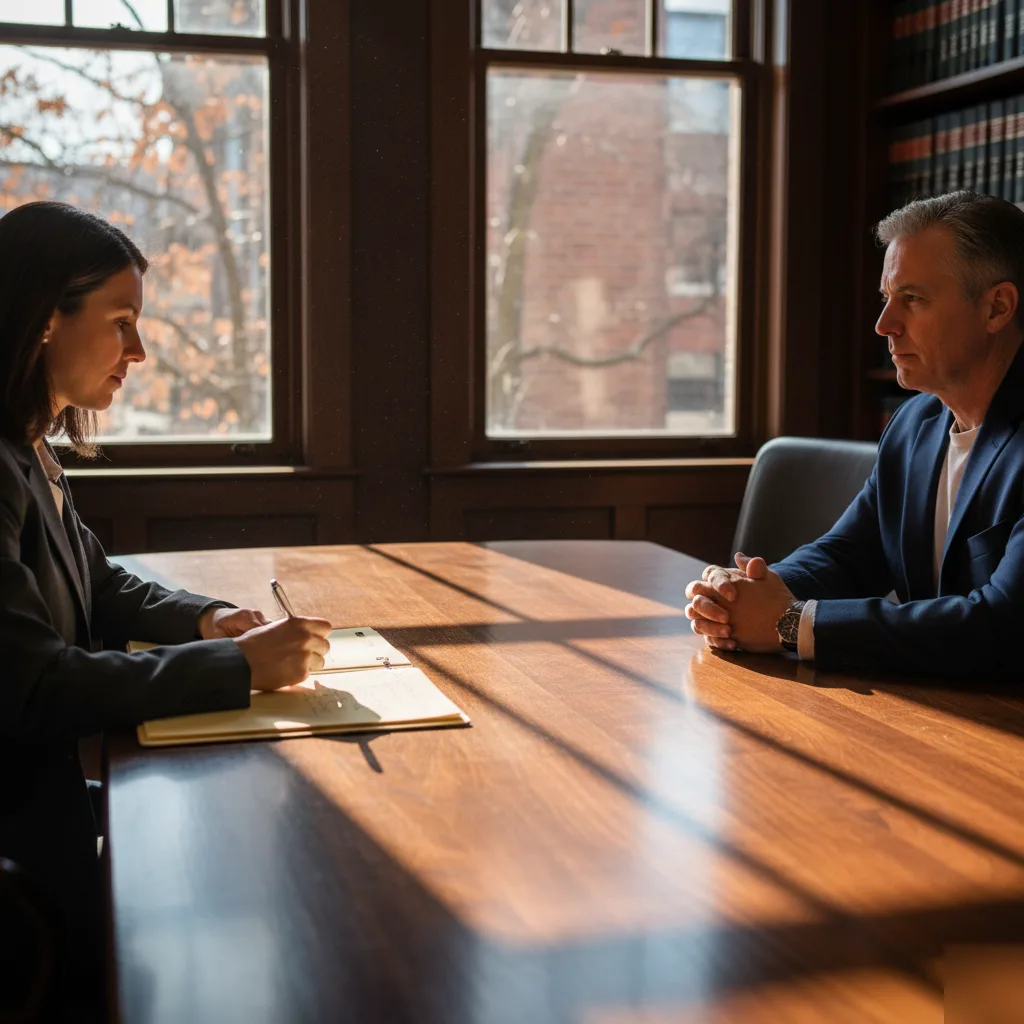
Walking into a law office for the first time can feel overwhelming. We see this every week. Someone sits across from us, perhaps with slightly shaking hands, unsure where to begin. That is completely understandable. A divorce consultation is not a test; it is a conversation.
However, a little preparation helps. The more organized you are, the more ground we can cover during that first meeting. The more we cover, the faster we can build a strategy that fits your specific situation.
What to Bring
Here is what helps us assist you from day one:
- Recent tax returns, at least for the last two years.
- Pay stubs or proof of income for both you and your spouse.
- Bank and retirement account statements.
- Mortgage documents or lease agreements.
- A list of questions you want answered, even if they seem basic.
You do not need everything perfectly organized. Bring what you have. Our team will identify any missing information and tell you exactly what else we will need as your case proceeds in Worcester County Probate and Family Court.
What to Expect
Your first meeting is not about making final decisions. It is about understanding your available options under Massachusetts law. We will discuss whether divorce litigation, collaborative divorce, or divorce settlement negotiations are the most suitable for your circumstances. We will also address asset division, alimony assistance, and parenting plan development if children are involved.
Unsure if you even want a divorce yet? That is quite common. Many clients near the Shrewsbury Street area and across Worcester come in just to understand what a legal separation filing would involve compared to a full divorce. There is no pressure either way.
One piece of advice we always share: write down your goals before your meeting. These are not legal goals, but life goals. Where do you want to live? What matters most for your children? What financial outcome would provide you peace of mind? Your answers to these questions will shape our legal strategy. With over 70 years of combined experience, that effective legal strategy starts with understanding what you are truly fighting for.
Need help figuring this out? Call us for a free consultation.

Protecting Your Position Before and During the Divorce Process
The decisions you make now hold more weight than you might realize. We frequently observe situations in Worcester where someone moves out of the family home, closes a joint account, or posts something on social media without careful thought. Instantly, their standing in the divorce shifts.
Protecting yourself does not mean being aggressive. It means being thoughtful and cautious from the very beginning.
Steps to Take Before You File
There is important groundwork to complete before any paperwork goes to the Worcester Probate and Family Court. Here is what we guide clients through:
- Gather financial records. This includes bank statements, tax returns, mortgage documents, and retirement account statements. Collect copies of everything you can legally access.
- Create a list of all marital assets and debts. This covers cars, real estate, credit cards, and loans. Even that storage unit over in Green Island you might have forgotten about.
- Open an individual bank account if you do not already have one. Do not drain joint accounts, but make sure you have access to funds for your basic needs.
- Document your involvement with your children. Note school pickups, medical appointments, and coaching their teams. This information is important for parenting plan development later.
- Avoid major purchases or significant financial moves. Courts in Massachusetts carefully review spending patterns once a divorce is imminent.
Clients who prepare early are often in a stronger position. This is not just an opinion. It is what we have observed across thousands of family law cases, supported by over 70 years of combined experience.
What to Avoid Once the Process Starts
Once you have filed, Massachusetts courts issue automatic restraining orders concerning finances. This means neither spouse can hide assets, take on unusual debt, or change insurance policies. Violating these orders can seriously harm your credibility with the judge.
Also, do not underestimate digital footprints. Text messages, emails, and social media posts can all appear in court. We tell every client the same thing: assume everything you write or post will be seen by a judge in Worcester.
Unsure of your current standing? Call us for a free consultation. We can help you determine your next steps before the situation becomes more complex.
Protecting your position is not about winning a fight. It is about ensuring you do not lose ground that is difficult to recover.
Reach out by calling the office at (508) 425-6330 or through filling out our online contact form.
Frequently Asked Questions
What is the difference between a 1A and 1B divorce in Worcester?
A 1A divorce means you and your spouse agree on everything and file together. A 1B means one spouse files alone, often because there is a disagreement. In Worcester, a 1A case can move through Probate and Family Court in about 30 days. A 1B takes longer and may involve discovery and temporary orders. Even if you think you agree, get legal advice before signing anything. Many people miss overlooked assets or unworkable terms in agreements they drafted themselves.
How does Massachusetts divide property in a divorce — is it always 50/50?
No, Massachusetts does not use a strict 50/50 split. The state follows equitable distribution, which means the court divides property fairly — but not always equally. A judge considers things like the length of your marriage, each spouse’s income, and contributions to the household. This applies to real estate, retirement accounts, and business interests. What seems fair on paper may not hold up in Worcester Probate and Family Court without proper legal guidance behind it.
When do I need to call a divorce attorney right away in Worcester?
Usually, a pre-marriage inheritance stays yours — but it depends on what happened to that money afterward. If you deposited it into a joint account or used it to renovate your home in Burncoat or Salisbury Street, the line gets blurry fast. Massachusetts courts look at whether separate funds were “commingled” with marital assets. Once that happens, protecting that inheritance takes careful documentation and legal tracing. The sooner you flag it, the better your position.
Should I try to settle or go to court in a complex Worcester divorce?
You need legal advice immediately if your spouse has moved money, threatened to take your children out of state, or if you have been served with divorce papers. Massachusetts courts can issue temporary orders to protect you and your children — but only if someone requests them. Waiting even a few days can put you in a catch-up position. Clients from neighborhoods like Main South and Burncoat have come to us after their spouse already acted. Early advice makes a real difference.
Do I have to go to court for a divorce in Worcester?
Not always. If you and your spouse reach a full agreement, a 1A divorce typically requires just one court appearance at Worcester Probate and Family Court. Many cases that start as contested 1B filings eventually settle before reaching trial. Mediation and collaborative divorce are real options that keep you out of a courtroom. The right path depends on your specific situation — your relationship with your spouse, the assets involved, and whether children are part of the picture.
How does alimony work under Massachusetts law after a divorce?
Massachusetts updated its alimony laws in 2012, and the rules are specific. The amount and duration of alimony depend on how long you were married and each spouse’s income. For example, a marriage under five years generally results in shorter alimony than a 20-year marriage. These are not automatic calculations — a judge has discretion. Getting clear legal advice before agreeing to any alimony terms in Worcester can protect you from a long-term financial commitment that does not reflect your real situation.
Call our office today at (508) 425-6330 or contact us online to set up a free consultation.
Why Choose Rudolf, Smith, Griffis & Ruggieri, LLP?
What Sets Us Apart
Trial Preparedness
Our attorneys know the value of examining evidence, hiring investigators, and interviewing witnesses. We can go to court on your behalf at any moment.
Personal Attention
We purposely limit our caseload to make sure our clients receive one-on-one attention. We treat you like one of our own because you deserve it.

Strategic Approach
To represent our clients effectively, we must have an effective strategy put into place. We are calculated, prepared, and primed to take action.
Collaborative Insight
We believe in working together as a unified team. By working collaboratively, each team member can bring unique critical thinking solutions to the table.

Get Started With a Consultation
Contact Us Today or Call Us at (508) 425-6330