
Property Division in Worcester
The Mechanics of Property Distribution in Massachusetts
Massachusetts operates under the principle of equitable distribution, which, contrary to common misconception, does not mandate an equal split. Rather, it obligates the court to effect a distribution that is just in light of the unique circumstances of the parties. This is a concept we impart to our Worcester clients daily, and we frequently observe the palpable relief they experience upon realization of this distinction.
In accordance with M.G.L. c. 208, § 34, a judge is required a broad spectrum of variables prior to making any property allocation. The court considers each spouse’s income, how long the marriage lasted, each person’s age and health, and what each spouse contributed to the marriage. Crucially, the Court also examines the contribution of each spouse as a homemaker and parent within the family unit, including raising kids, managing a household near Tatnuck or Green Hill, supporting a spouse’s career.
Defining Marital Property
The question of what constitutes marital property frequently catches people off guard. As the Massachusetts Bar Association advises, Massachusetts courts are generally empowered to distribute any property owned by a spouse at the time of divorce, regardless of whose name appears on the title. These marital assets may encompass:
- The family home, even if owned only by one of the spouses
- Retirement accounts and pensions that accrued during the marriage
- Business interests, stock options, and other investments
- Motor vehicles and bank accounts
- Gifts and inheritances obtained during the marriage
Frequently, clients approach us with the notion that “everything that is mine is mine,” whereas such an assumption is not necessarily accurate under Massachusetts law.
It bears mentioning that the trial judge possesses broad discretion in determining what property is marital property and how it should be divided. Two couples with comparable assets in Worcester may receive drastically different awards as a result of the specific facts of their cases. This serves to illustrate why the guidance of a Worcester County Probate and Family Court attorney is so to ensuring that you receive the fair distribution you are entitled to under the law. We have more than 70 years of experience combined in learning how judges approach the property division analysis.
Accordingly, property division in Massachusetts should not be conceptualized as a mathematical exercise. It should instead be seen as a legal argument premised on a sound understanding of the facts, strategy, and applicable law.

Distinguishing Between Marital and Separate Property
This is the point at which many individuals are confused. They assume that there is a clear distinction between that which is separate property and that which is marital property, when in reality such lines are often blurred.
Massachusetts is not one of the handful of jurisdictions that adheres to the tenets of community property. Instead, our courts follow a scheme of equitable distribution, under which the judge in each particular case must determine what property division plan is fair, rather than strictly equal. The assessment of “fairness” depends on a range of variables, including your history as a family, the size of your marital estate, and the contributions you made to the marital enterprise.
, what types of property constitute marital property? Broadly speaking, marital property includes any asset that was acquired by one or both of the spouses through earnings during the marriage. This is the house you purchased together near Elm Park. The retirement plan you have accrued over the years of your marriage. Jointly held money, including any savings accumulated through a business one of you founded post-wedding, can all be split by the Court.
Separate property is different, but the lines aren’t as clear as many assume. Separate property includes things like:
- Property owned before the marriage;
- Gifts made to one spouse only;
- Inheritance received by one spouse only;
- Property governed by a prenuptial agreement.
Here’s what shocks people: under Massachusetts law, separate property can be split as well, and we encounter this situation weekly. For example, a spouse might inherit money from a parent, then take the money and deposit it in a joint account to put into a renovation to a marital home. This inheritance is harder to keep separate than before.
Separate property is commingled. Once separate assets are commingled with marital assets, the separate assets are difficult to identify as separate, even if not impossible. A skilled attorney can identify and isolate those assets if you have proper documentation. If you do not have solid documentation for each of your accounts and can show when your assets came to your accounts, an attorney skilled in Worcester Probate and Family Court may be able to trace the path of those assets to help isolate separate property from marital property.
Are you keeping proper documentation of the assets you brought into the marriage? The majority of our clients have never properly documented the assets they brought into the marriage. We see this often. This documentation is critical in the event a divorce does occur.
Our attorneys help clients throughout the greater Worcester area determine exactly which assets they own, sifting through bank statements, property records, and account histories to create a full picture of the marital estate. A clear record of assets is essential — it ensures the court’s attention is directed to the assets owned by each spouse that you want to keep, rather than have divided. This is where you could miss tens of thousands of dollars, if not more. Get the divorce service you need from our experienced Worcester legal team before you risk leaving anything on the table.
Equitable Distribution of the Marital Home In a Competitive Market
Generally, a family home is the largest marital asset, which creates the most difficult challenges in the Division of Marital Assets.
This is especially so in the Worcester area. Home values in neighborhoods like Burncoat and Tatnuck have seen a steady increase over the last few years, which means that home equity in Worcester County may be much higher than you realize. This is a good thing financially for your marital estate, but also presents a more difficult challenge to the Division of Marital Assets since neither party will want to walk away from their fair share of that equity.
The Court’s equitable distribution of the assets will determine an outcome based on a variety of factors that the Court considers, such as your respective incomes, duration of the marriage, each party’s contributions, and each party’s future needs. At the center of that analysis is the family home. The equitable share you are entitled to is generally an unequal percentage. The Court looks to the facts of your specific case to decide who is entitled to what.

Your Options for Marital Homes in Worcester
For most clients in Worcester, there are 3 primary outcomes for the disposition of the marital home in a Divorce case:
- Sell the home and split the proceeds This is the easiest option for everyone. The property is listed for sale by the parties, and they split the remaining balance after the home is sold and the mortgage paid. In the case of a competitive housing market in Worcester County, you may be able to realize your home value in a higher market, allowing for each spouse to walk away with a larger sum to their name.
- Buy the other person out. This is refinancing the mortgage into your name and paying the other person their share of the equity. It sounds like it should be, but it almost never is.
- Defer the sale. This is when one parent keeps living in the house until the children graduate from high school. This strategy requires a clear agreement about who pays the mortgage and utilities, and when the house will eventually be sold.
Often the battle of the house isn’t about the house at all. It’s about what the house symbolizes: the kids getting through school on a stable foundation. It’s about feeling like there is something you can control as the divorce rips your life apart. this.
But you can’t let feelings dictate your approach. You have to get an up-to-date appraisal of the home, not an estimate from Zillow. You have to calculate the tax impact of a sale compared to keeping the home. You have to determine if you’ll be able to afford the mortgage on one income. We’ll help you navigate through all those considerations before you ever put pen to paper.
Do you need help figuring out what your house can mean for your case? Contact us for a free consultation.
Retirement Accounts, Pensions, and QDROs Explained
Your retirement savings may be the largest asset you have. We regularly see couples in Worcester focusing all of their attention on the house, the cars and their bank accounts. Then all of a sudden they realize their 401(k) is worth a lot more than the sum of those assets.
Massachusetts considers all retirement savings to be marital property that has been accrued while a couple is married. This includes 401(k)s, 403(b)s, IRAs, pensions and deferred compensation plans. If you only have one retirement account, the marital portion is subject to equitable division.
What’s a QDRO and Why Does It Matter?
A QDRO (Qualified Domestic Relations Order) is a special legal document that instructs the administrator of your spouse’s retirement plan how to split the retirement account. Without one in place, you cannot tap the employer plan. The most shocking part is that the court order itself isn’t enough. The retirement plan administrator requires a separate QDRO that conforms with the federal rules established by ERISA.
There’s money on the line for every QDRO you get wrong. Or every QDRO you mess up and need to amend to fix some technicality. We’ve seen many cases where clients in the Greendale area were struggling to get their QDRO properly set up because their attorney never finished writing it. This type of drafting error is all too common and can be averted.
Here’s the basics of the QDRO process:
- Take stock of all retirement accounts held by both parties.
- Obtain up-to-date account statements. For pension, you also need to obtain a present value calculation.
- Determine the marital portion of each account.
- Prepare a QDRO that is compliant with the plan’s specific rules.
- Submit it to the plan administrator for preapproval before the judge signs it
- Submit the signed and approved QDRO to the Worcester Probate and Family Court.
Things get even more complicated with pensions. There is no one single account number for pensions. The worth of a pension is determined by years of work, the pay history during those years, and the age or years of marriage when the benefit commences. We can also connect you with a financial professional, if desired, to make sure the valuation is accurate. It’s more frequent than you think for someone to be unaware of what their spouse’s retirement accounts are actually worth. We can help you find out! Call today for a free consultation. It’s critical to move quickly, though, as certain plans have a time limit for filing after the divorce is granted. In some instances, missing a deadline in Worcester County could result in the loss of your share entirely.
The Property Division Process at the Worcester Probate and Family Court
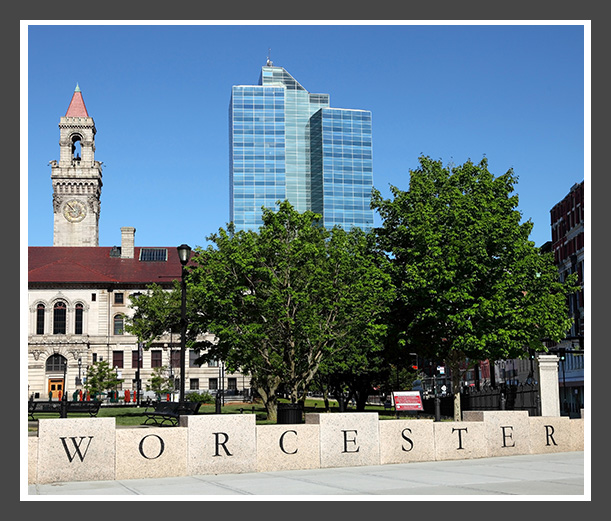
Many individuals show up at the Worcester Probate and Family Court located on Lincoln Street without any knowledge of the process. That’s perfectly normal. We have walked clients through this process over a hundred times, and the uncertainty is consistently the most challenging element. Here’s the reality. Property division in Worcester has a defined trajectory. Learning these steps relieves some of that pressure.
Understanding how the Process Advances
Once you submit a divorce complaint, the court demands that both parties share their financial data. This is known as discovery. You’ll be asked to file a financial statement, a summary of your entire financial status: everything in your possession and what you don’t, where you work and your earnings, and where your money goes. Every week we notice people fail to appreciate just how significant that step is. Their divorce cases hinge on nothing more than this.
Once discovery has occurred, typically the progression will be the following:
- Both parties file a sworn financial statement to the court.
- Each spouse identifies each asset as marital or separate.
- If needed, the court may order valuations of the marital assets (i.e., appraisal of real estate, business, and/or pension).
- Attorneys attempt to reach a consensus by way of a settlement conference on a proposed division of assets.
- If the parties cannot arrive at a settlement, a trial date will be set and a Worcester County judge will issue a final judgment.
Most cases are resolved by settlement. However, having an attorney on board who is also prepared to stand before a judge in the Worcester County Probate and Family Court gives you significant strength during settlement talks.
Consider What the Judge Considers
Property is split by the court based on fairness and not necessarily an equal split. In Worcester Probate Court, the judge takes into consideration the length of the marriage, each spouse’s income and future ability to make that money, contributions to the household and the future needs of each party. The court is aware that a single-income family where the wife has never been employed and lives in the Burncoat community is very different from the couple where both spouses work and one owns a downtown business.
In addition, you should note that, contrary to what you may have thought, judges in Massachusetts are empowered by General Laws Ch. 208, Sec. 34 to distribute nearly any property, regardless of whether the asset was acquired before the parties’ marriage. How you present the facts and financial circumstances of your case can ultimately impact the division of assets. With over 70 years of combined experience, we are well aware of the nuances that exist in Worcester Probate Court and the judges themselves.
Are you prepared to explore this issue further? Give us a call today for a free consultation.
Call our office today at (508) 425-6330 or reach out here online to set up a consultation.
Frequently Asked Questions
Does Massachusetts split marital property 50/50 in a divorce?
No, Massachusetts does not require a 50/50 split. The court follows equitable distribution, meaning a judge divides property based on what is fair — not equal. Factors like how long you were married, each spouse’s income, and contributions as a homemaker all matter. Two couples in Worcester with similar assets can walk away with very different outcomes. That’s why understanding the law before you go to court makes a real difference for you.
Can a judge in Worcester divide property that’s only in my spouse’s name?
Yes, a judge can divide it. Under Massachusetts law, the court can distribute any property owned by either spouse at the time of divorce, regardless of whose name is on the title. This surprises many people. The family home near Elm Park, a retirement account, even a business — all of it can be on the table. Title alone does not protect an asset from being divided by the Worcester Probate and Family Court.
What happens to an inheritance I received during the marriage?
An inheritance can still be divided by the court, especially if it got mixed with marital funds. This is called commingling. For example, if you inherited money and deposited it into a joint account or used it to renovate your home near Tatnuck, it becomes much harder to keep separate. If you have documentation showing the money’s original source, an attorney may be able to trace and isolate it. Without records, you risk losing that asset in the division.
How does the Worcester Probate and Family Court handle dividing the family home?
The family home is usually the largest asset in a divorce, and Worcester cases are no different. The court may order a sale and split of the proceeds, or one spouse may buy out the other’s share. A competitive real estate market can complicate this further. The judge weighs factors like who has been living there, whether children are involved, and each spouse’s ability to maintain the home. Getting a proper appraisal early gives you a stronger position.
Do I need documentation of assets I owned before the marriage?
Yes, and most people don’t have it ready. If you want to argue that certain assets are separate property — meaning owned before the marriage — you need records to back that up. Bank statements, account histories, and property records all help. Without documentation, a Worcester Probate and Family Court judge may treat those assets as marital property. An attorney can help you trace the history of your accounts, but the stronger your paper trail, the better your outcome.
How long does property division typically take in a Worcester divorce?
It depends on how complex your assets are and whether both sides can agree. An uncontested case where both spouses agree on property terms can resolve in a few months. A contested case involving business interests, retirement accounts, or disputed separate property can take a year or longer in Worcester County. The more documentation you have organized upfront, the faster the process tends to move. Starting early with an attorney helps avoid delays caused by missing financial records.
Call our office today at (508) 425-6330 or contact us online to set up a free consultation.
Why Choose Rudolf, Smith, Griffis & Ruggieri, LLP?
What Sets Us Apart
Trial Preparedness
Our attorneys know the value of examining evidence, hiring investigators, and interviewing witnesses. We can go to court on your behalf at any moment.
Personal Attention
We purposely limit our caseload to make sure our clients receive one-on-one attention. We treat you like one of our own because you deserve it.

Strategic Approach
To represent our clients effectively, we must have an effective strategy put into place. We are calculated, prepared, and primed to take action.
Collaborative Insight
We believe in working together as a unified team. By working collaboratively, each team member can bring unique critical thinking solutions to the table.
Get Started With a Consultation
Contact Us Today or Call Us at (508) 425-6330